Apron, Tunic or Suit: What Protects You Best at the Chair?
What each type of salon workwear covers, where it leaves you exposed, and how to choose for the work you actually do.
By Comfort & Beauty Studio · 6 min read · 11/13/2026
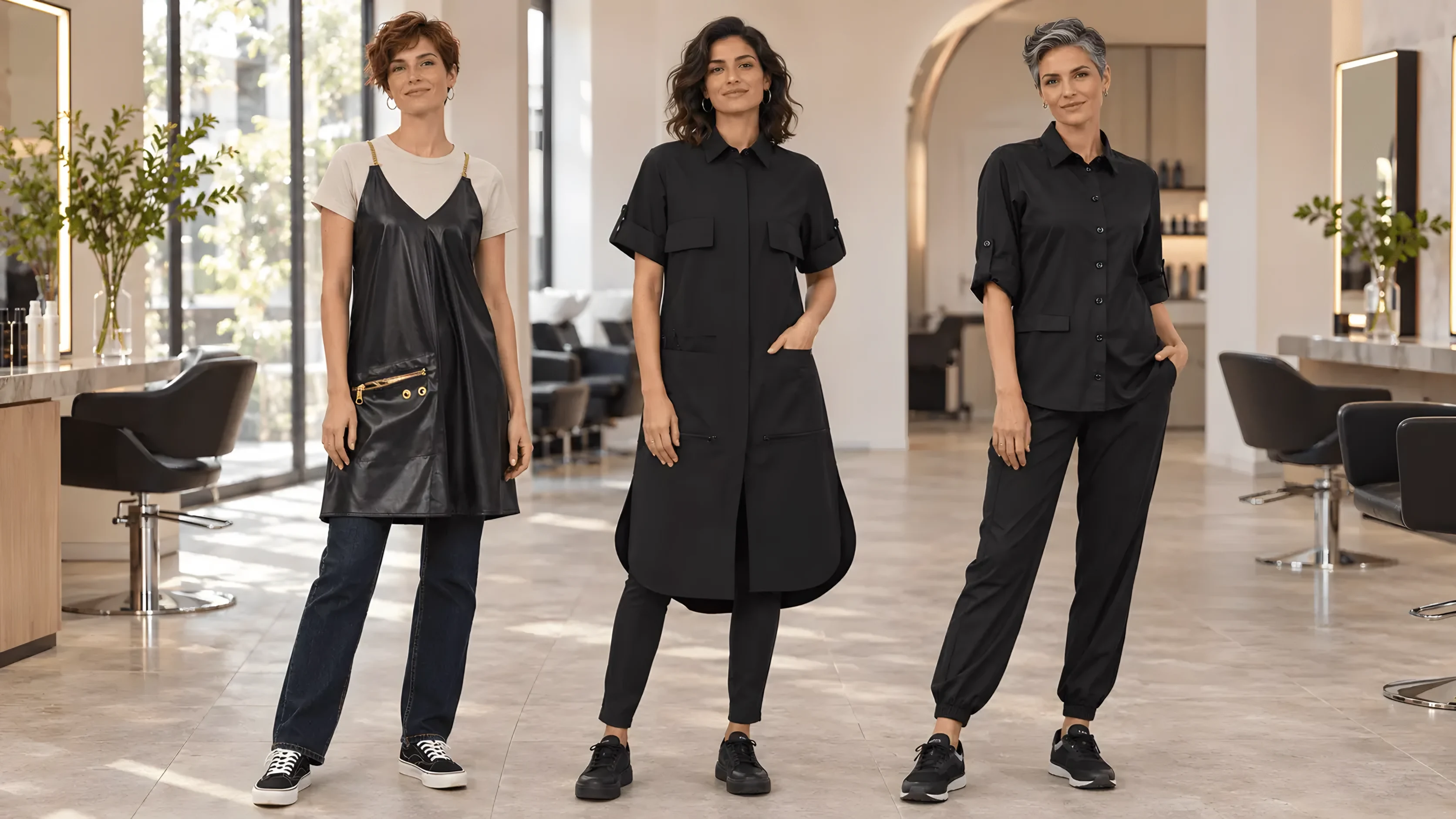
Walk into ten salons and you will see ten answers to the same question: what should a stylist wear over — or instead of — their own clothes? Each option protects a different part of you. Here is how they compare.
The apron: quick, but partial
An apron goes on in seconds and comes off between clients. It protects the front of your body, where most drips from the bowl land. What it does not cover is your sleeves, shoulders and back — exactly where dye mist settles and where you brush against a client's freshly colored hair. An apron over your own clothes still leaves those clothes at risk. It works best as an extra layer for messy jobs, on top of workwear that can take a splash. An eco-leather apron, like our ZOLLO, simply wipes clean.
The tunic or robe: full cover, one piece
A tunic or robe covers your arms, shoulders, back and much of your legs while you wear whatever you like underneath. It is the classic colorist choice: one garment to put on in the morning, and everything under it stays safe. Longer robes protect more; shorter tunics are cooler and easier to move in. Look for sleeves you can roll up or adjust — wet cuffs at the basin are a daily annoyance.
The suit: a complete work wardrobe
A two-piece suit replaces your own clothes entirely. Top and pants are made of the same resistant fabric, so nothing of yours goes near the chemistry. It looks the most finished — closer to a uniform than a cover-up — and the pieces can be bought separately, so you replace only the top or only the pants when one wears out. The trade-off: you change into it, rather than throwing it over what you already wear.
How to choose
Think about your day, not the catalog. If most of it is spent applying color or lightener, cover as much as you can: a suit or a long robe. If you cut more than you color, a tunic or robe gives enough protection without changing your whole outfit. If you only need extra cover for the occasional messy job, add an apron on top — as backup, not as the main line of defense.
Whatever you choose
The cut decides what is covered; the fabric decides whether it survives. Ordinary cotton under an apron still loses to dye mist on the sleeves. Whichever shape you pick, choose fabric made to resist dye, oxidants and bleach powder, and wash it at 40 °C or below.