What 'Bleach Resistant' Actually Means
It doesn't mean invincible. It means the fabric doesn't hold pigment or surrender its color the way ordinary clothes do. Here's the honest version.
By Comfort & Beauty Studio · 5 min read · 5/20/2026
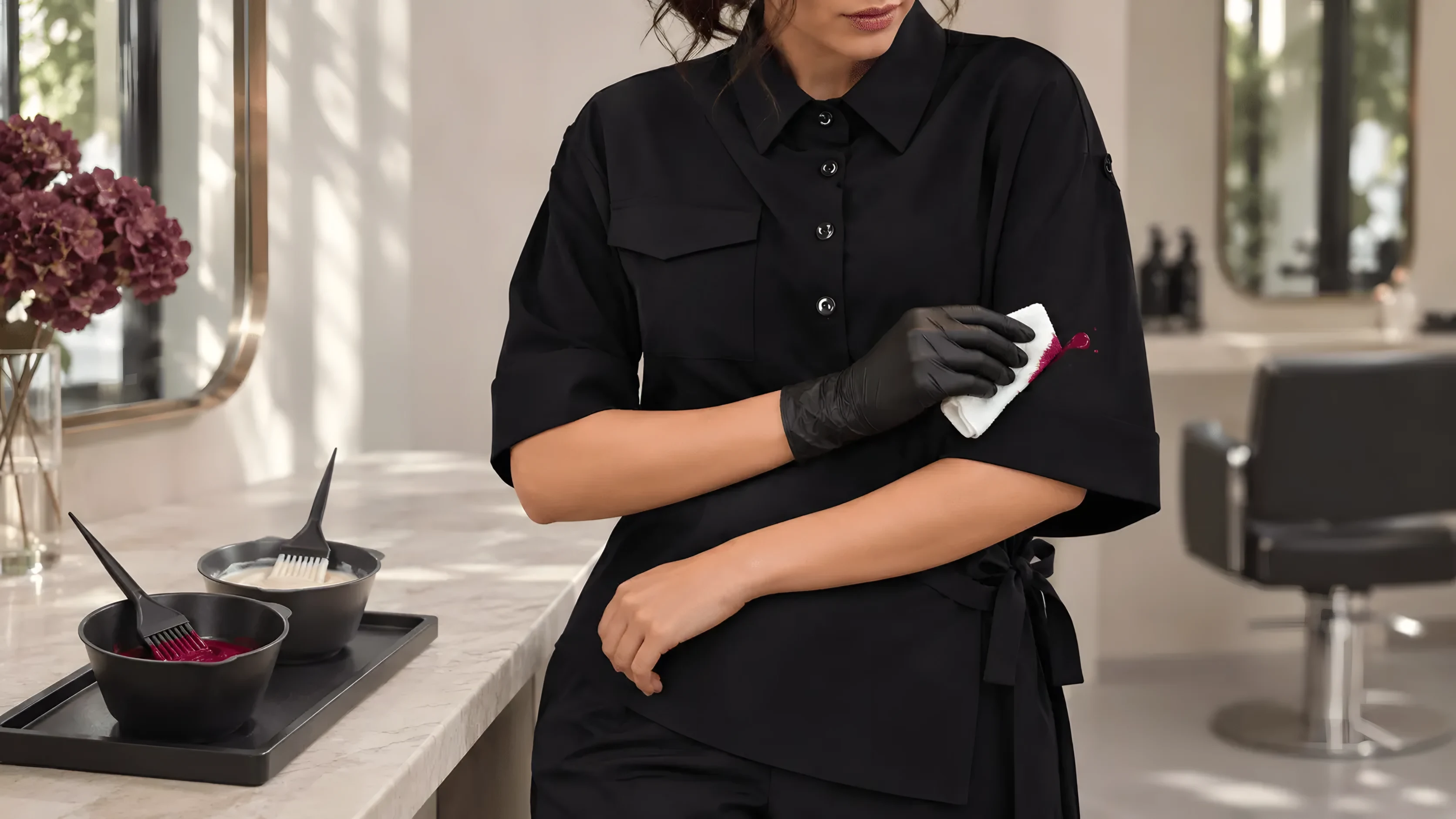
"Bleach resistant" is an easy claim to print on a label and a hard one to explain. So here is the honest version of what it means on our garments — and what it doesn't.
The two ways color day kills clothes
Hair chemistry attacks clothing from two directions. Dyes work by depositing pigment that bonds into fibers — on your client's hair by design, on your sleeve by accident. Lighteners work the other way: bleach powder and oxidants strip color out of whatever they touch, leaving pale ghosts on dark fabric. An ordinary cotton tee loses both battles.
What resistance means
Our fabric is selected and finished so that it doesn't readily take pigment in or give its own color up. Splashes sit on the surface instead of soaking into the fiber, which is why they wipe off wet and wash out at 40 °C instead of becoming permanent. Colorists who wear our pieces daily tell us the fabric shrugs off even blond paste — the harshest thing most salons mix.
What it doesn't mean
Resistant is not invincible, and we won't pretend otherwise. Leave a pool of lightener sitting on any fabric for an afternoon and you're testing chemistry, not workwear. Good habits still apply: wipe splashes when you notice them, wash at or below 40 °C, skip chlorine-based detergents you don't need anyway. The difference is that with resistant fabric, normal salon accidents stay accidents instead of becoming permanent souvenirs.
Why we lead with this
Because it's the entire reason this brand exists. A garment that survives the chemistry is a garment you don't replace — and clothes you don't replace are clothes that pay for themselves. Everything else about our pieces — the cuts, the pockets, the eco-leather details — is built on top of that one non-negotiable.